Bodensee 536: Microplastic Mapping on Lake Constance
17. November 2026
TransVer Award 2026: GDV Honours DANUBE 2850
2,850 kilometres, ten countries, almost 400 samples: Wasser 3.0 receives the GDV TransVer Award 2026 for DANUBE 2850. An award that proves change does not have to wait for the big solution.
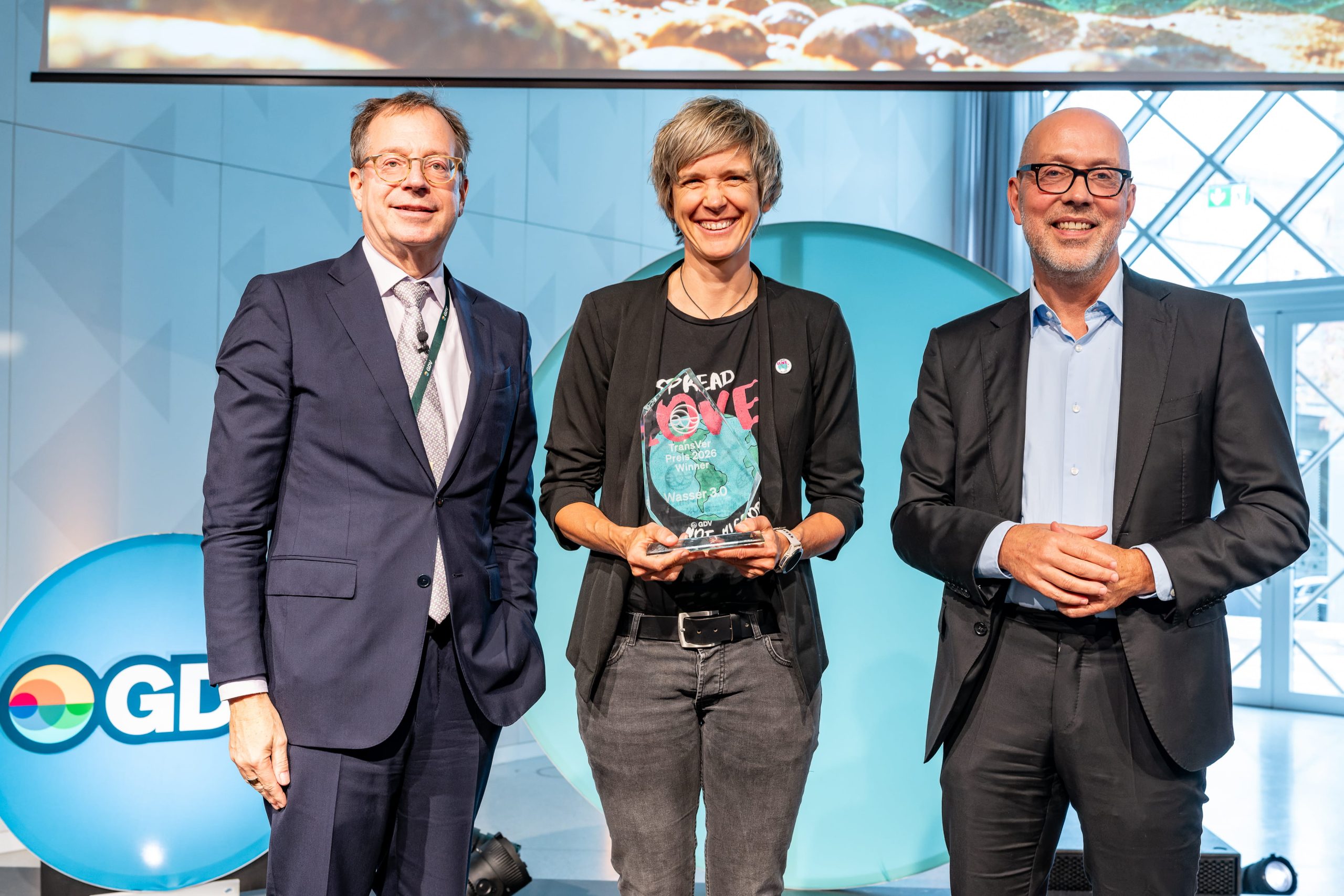
This year’s TransVer Award was presented to Dr Katrin Schuhen (centre) by GDV Chief Executive Jörg Asmussen (left) and Dr Norbert Rollinger (right), President of the German Insurance Association (GDV), on behalf of the project. | Credits: GDV
Some awards you simply accept. Others make you pause for a moment – because they bring to light what an entire team has worked on for months. For us, the TransVer Award 2026 is one of the latter: the German Insurance Association (GDV) has honoured Wasser 3.0 gGmbH for its DANUBE 2850 project (article in German). GDV Chief Executive Jörg Asmussen presented the award as part of TransVer Day (in German), the insurance industry’s annual sustainability day at the Futurium in Berlin.
What is the TransVer Award?
Since 2021, the GDV has presented the TransVer Award to projects that make an outstanding contribution to sustainable transformation. The focus is not on declarations of intent but on concrete solutions – projects that show how change works in practice. Previous winners include Klima°vor acht, Klimadelegation and Klimafakten. You can learn more about the association on the GDV English website.
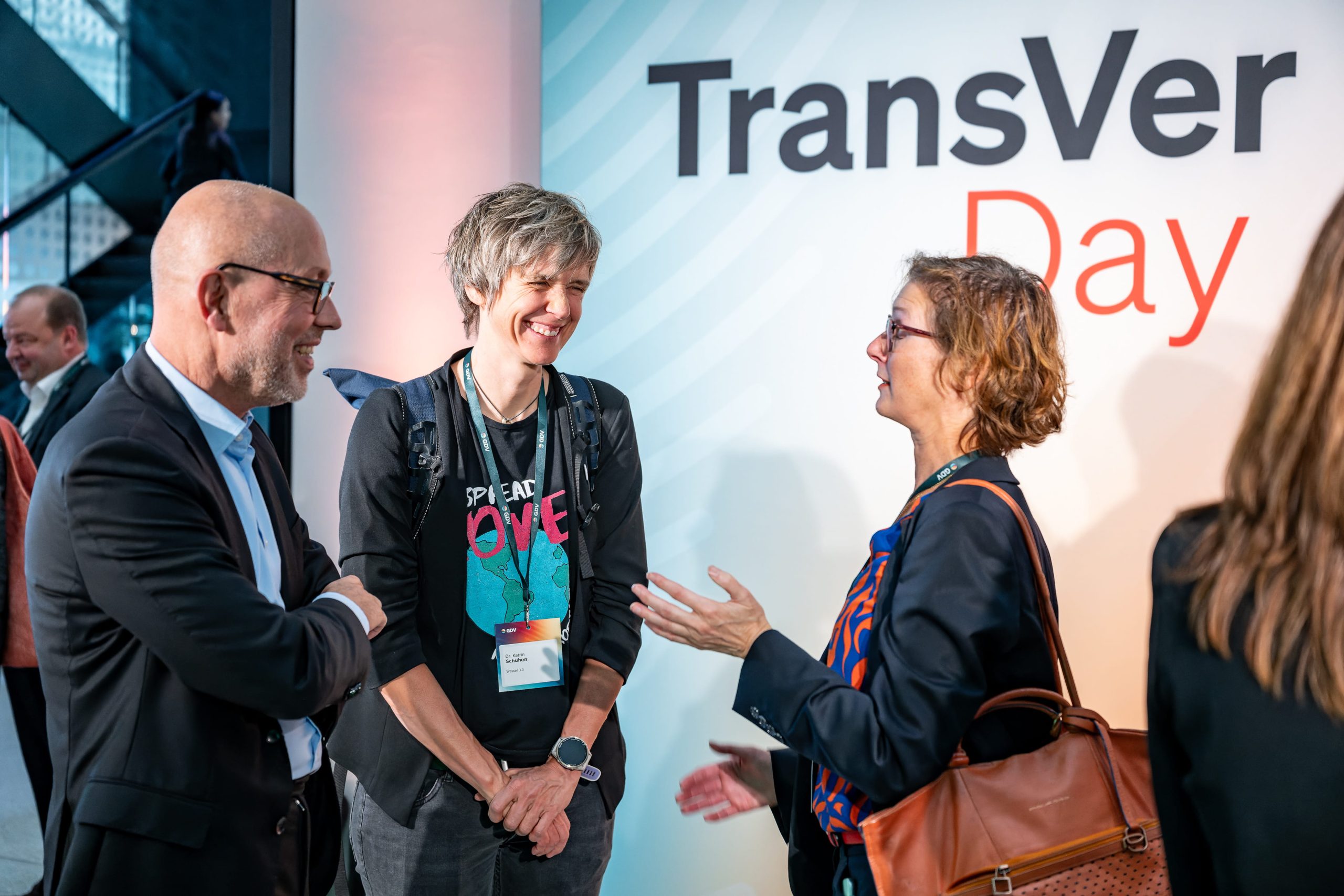
Katrin Schuhen in conversation with Manuela Willert and Jörg Asmussen at TransVer Day 2026 | Credits: GDV
DANUBE 2850: one river, ten countries, almost 60 days
With DANUBE 2850, we set ourselves an ambitious goal: to test the entire Danube for microplastics – around 2,850 kilometres from its headwaters to where it flows into the Black Sea. The work began at the source. We had already analysed the Brigach and the Breg, the two headwaters that merge in Donaueschingen to form the Danube, in advance. Our team then sampled the upper course from Donaueschingen to Ulm ourselves.
In July 2026, Dresden-based extreme swimmer Dr Joseph Heß entered the water in Ulm and swam from there all the way to the mouth – a distance most people would cover by plane. That meant an average of about 50 kilometres a day and eight to twelve hours in the water. His route took him through ten countries, past Vienna, Bratislava, Budapest and Belgrade, and through the Iron Gates gorge in the Carpathians.
By early September, he had made it: after almost 60 days, Heß reached the Black Sea at Sulina (in German). An exceptional athletic achievement – all the more so because historically low water levels had changed the river in many places.
Yet DANUBE 2850 was never just a record attempt. From Ulm to the Black Sea, our research team accompanied the swimmer and took water samples following a standardised procedure. Combined with the data from the Brigach, the Breg and the stretch down to Ulm, this creates a continuous picture of the entire river. The headwater values serve as our baseline for everything that follows downstream.
What the data shows
More than 250 sampling points were planned; in the end, we analysed almost 400 samples. The result is the first continuous microplastics map of the Danube – and its findings are encouraging:
- Pollution does not simply increase steadily downstream.
- There are clearly identifiable entry points where microplastics enter the river.
- Some tributaries are more heavily polluted than the Danube itself.
This is exactly where the opportunity lies: if you know where the hotspots are, you can take targeted, efficient action instead of tackling the problem across the board at high cost. The data is available to the EU and Germany. We collect comparable data for other rivers, such as the Neckar and the Neisse, using the same approach.
The fastest or easiest path is not always the one that has the greatest impact.
Of course, water samples could have been taken more easily. But we did not just want to measure microplastics – we wanted to make them visible and draw attention to a problem that is barely noticeable to the naked eye.
Measure, understand, act
After the final stroke comes the less spectacular but decisive work: turning the data into applicable knowledge. Where is pollution particularly high? What does this mean for protecting the Danube?
At the same time, Wasser 3.0 does not stop at describing the problem. With our detect | remove | reuse approach, we detect microplastics, remove them and return them to the material cycle. Our Wasser 3.0 PE-X® process causes the tiniest plastic particles to bind into larger clusters. Put simply: microplastics become macroplastics again – which can then be removed from the water and recycled. Jörg Asmussen highlighted this holistic approach in particular in his speech.
A comparatively small organisation does not wait for the big solution – it simply gets started.
Thank you – and what comes next
This award belongs to many people: to Joseph Heß, whose achievement is hard to even imagine; to our team of seven, who secured sample after sample between Donaueschingen and the Black Sea; and to all the partners, sponsors and donors who made DANUBE 2850 possible. We sincerely thank the GDV for this recognition.
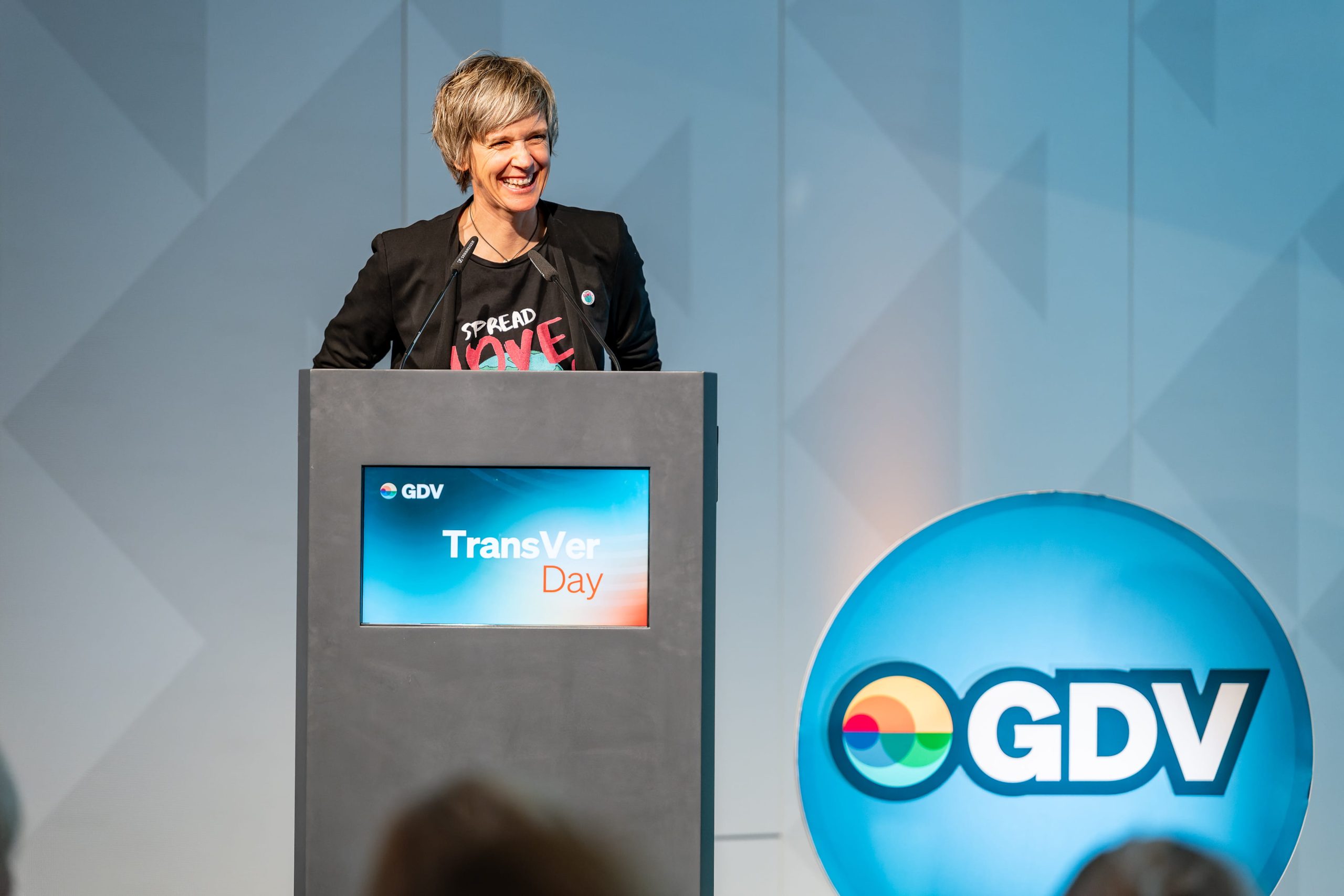
Katrin Schuhen at TransVer Day 2026. | Credits: GDV
What comes next? We are evaluating the results scientifically and will make them accessible. In addition, filmmaker Markus Weinberg is producing a documentary about the expedition, “2850 km – Invisible”.
It is time for all of us to raise our voices for our water.
Would you like to support our work for water free of microplastics or learn more about our projects? You will find everything at wasserdreinull.de.