
Educational project „WASoMI Lab“ launched
12. December 2024
More than just the Planet Hero Award
18. December 2024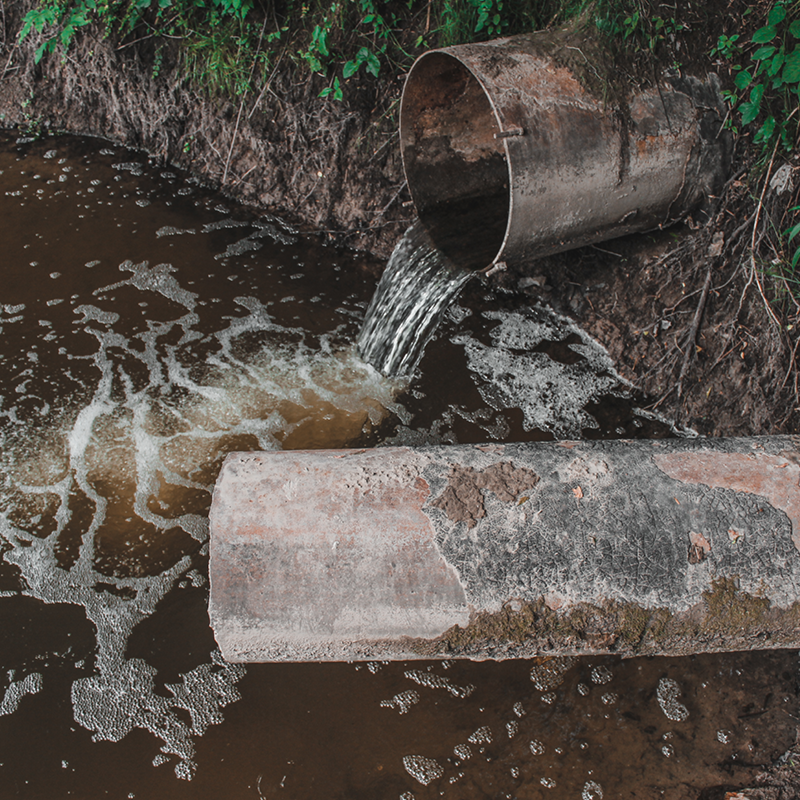
The EU Urban Wastewater Treatment Directive: from the 2024 parliamentary vote to the 2027 transposition deadline
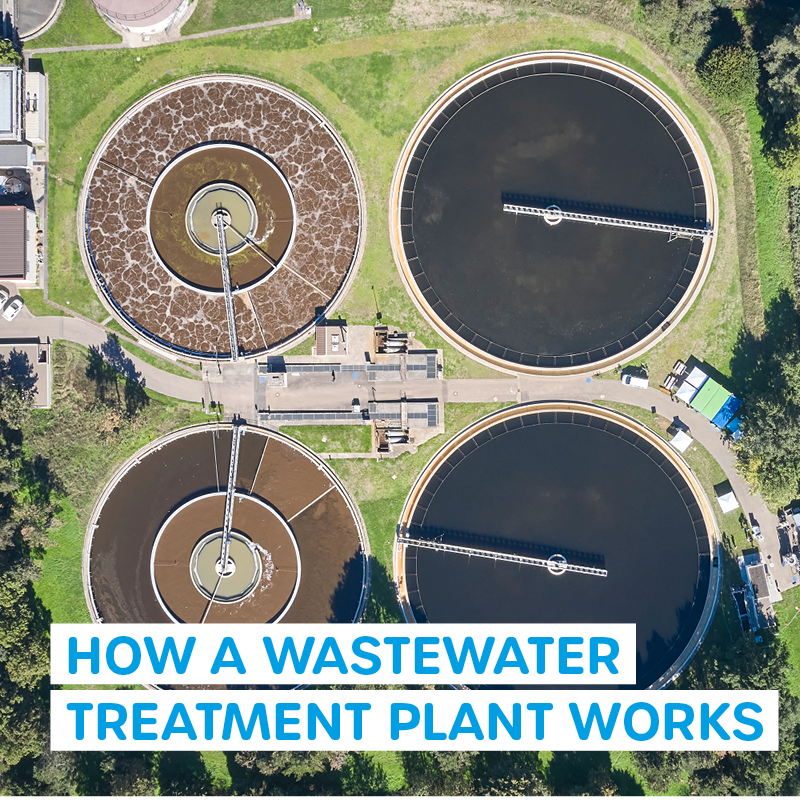
The European Parliament approved the agreement on the recast EU Urban Wastewater Treatment Directive on 10 April 2024. It became law later: the Council adopted the text on 5 November 2024, it was signed on 27 November 2024, published in the Official Journal on 12 December 2024, and Directive (EU) 2024/3019 has been in force since 1 January 2025. Among other things, it aims to remove microplastics and micropollutants from our wastewater and increase the efficiency of wastewater treatment plants overall. The keywords here are also: Resource conservation, water quality, circular economy, energy efficiency and sustainability. But what is the roadmap for this? We have taken the Wasser 3.0 perspective.
A framing note first: an EU directive does not apply directly. It obliges Member States to adapt their national law by a deadline. For the Urban Wastewater Treatment Directive that deadline is 31 July 2027. Until then, existing national law remains decisive. Anyone planning today is planning against a legal framework that is still taking shape.
Amendment of the EU Urban Wastewater Directive: Small steps for clean water
One of the primary objectives of the European Urban Wastewater Directive 91/271/EEC is to protect the environment from the harmful effects of inadequately treated urban wastewater. To achieve this, the EU directive places requirements on the member states. In addition to the collection and purification of wastewater from residential areas of a certain size, these also include the comprehensive collection of data and new planning of the so-called 4th purification stage for the removal of micropollutants.
The member states are obliged to report regularly to the EU Commission on the status of implementation of the directive’s requirements. The new version now makes adjustments.
The recast passed the plenary of the European Parliament on 10 April 2024 with 481 votes in favour, 79 against and 26 abstentions. The vote concerned the provisional agreement reached with the Council in January 2024, not the final legal act. In concrete terms, this means that new challenges will arise for municipal wastewater treatment plants, although in many places the old challenges with regard to global developments in climate and water protection have not yet been solved. All the more reason for us to offer our help as a non-profit organisation. For clean water and more water with a markedly reduced microplastic content.
|
FACT-CHECK NOTE What the recast actually requires: the application threshold falls from 2,000 to 1,000 population equivalents, with secondary treatment for all agglomerations of 1,000 population equivalents and above by 2035. The quaternary stage under Article 8 requires an average minimum removal of 80 %, demonstrated on at least six indicator substances from two categories, including carbamazepine, diclofenac and metoprolol in category 1 and benzotriazole and candesartan in category 2. The wastewater sector is to become energy neutral at national level by 2045. Article 5 requires integrated urban wastewater management plans, including storm water overflows. |
From our perspective: What is behind EU’s UWWTD?
Our main points of contact are in the areas of 4th treatment stage, 4th treatment stage plus, water reuse, and detection standards. Considering that all wastewater treatment plants with more than 150,000 population equivalents (PE) are to have a 4th treatment stage by 2045, this also means that an overview of the actual pollutant loads must first be obtained before planning for the expansion can begin. The build-out path is staged: 20 % of plants from 150,000 population equivalents by 2033, 60 % by 2039 and 100 % by 2045. The same applies to all wastewater treatment plants serving more than 10,000 PE that pose a particular risk according to a risk assessment, e.g. wastewater treatment plants that discharge their treated wastewater into bodies of water for drinking water use. For that group the steps are 10 % by 2033, 30 % by 2036, 60 % by 2039 and 100 % by 2045; the list of areas classified as sensitive must be drawn up by 31 December 2030. In addition to micropollutant analysis with extended monitoring of so-called pathogens, antibiotic resistance and PFAS, microplastic analysis is also coming to the fore.
For microplastics the legal framework is narrower than the attention suggests: Article 21 requires monitoring at inlet and outlet, not removal. The frequency is graded by size – from 150,000 population equivalents at least two samples per year with no more than six months between them, and between 10,000 and 150,000 population equivalents at least one sample every two years. From 150,000 population equivalents sewage sludge must also be monitored, and below that where it is used in agriculture. The directive contains no effluent limit value for microplastics, and Directive (EU) 2026/805 likewise lists microplastics only on the watch lists for surface water and groundwater, not as an environmental quality standard.


Uncertainty factor: analysis is lagging behind - while planning is being haphazardly carried out
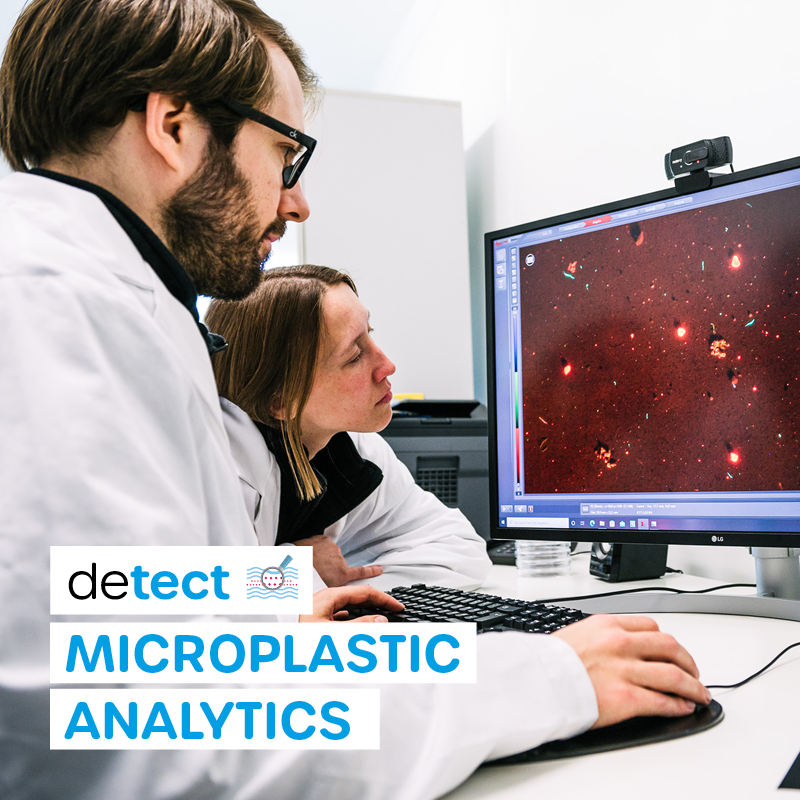
Data on micropollutant pollution in wastewater and water has been recorded for more than 20 years. Sometimes more, sometimes less - rather situational and, due to a lack of standards, comparative data and a lack of data harmonisation, only ever as individual values for individual events - rarely continuous, not at all comprehensive and certainly not comparative.
Analytical methods have been further developed, but DIN standards have not.
No one really knows what to do because the analytics lag behind the EU Urban Wastewater Directive. It’s great that action is being taken, but it makes little sense to proceed blindly with analysis. There are many traditional companies in the field of continuous data collection for micropollutants and microplastics, but also many new companies, that are working on closing the gaps. However, the fact that until now, most analytical developments do not produce comparable values makes any tangible action complicated.
There is also a statistical problem that exists independently of the measurement method: microplastics are distributed inhomogeneously in wastewater. In our own methodological work the relative standard deviation was 64 ± 19 % for grab samples and 41 ± 17 % for large-volume filtration. Securing a mean within a ±25 % margin of error at 95 % confidence requires 21 large-volume samples or 51 grab samples (Microplastics 2026, 5, 75). The directive requires two samples per year at large plants. A long-term measurement at the Landau-Mörlheim plant, with 320 samples over two years and three months, shows why this matters: effluent concentrations ranged from 0.6 to 194.0 particles per litre around a mean of 27.8 ± 29.8 MP/L (Microplastics 2024, 3, 492–502). Two individual values per year do not capture that dispersion.
|
FACT-CHECK NOTE What the monitoring obligation means in practice: the prescribed number of samples is enough to capture magnitudes and trends across many plants. It is not enough to determine a robust annual load or a removal performance for an individual plant. Anyone who needs the latter – for an investment decision or for an impact figure in sustainability reporting – must sample beyond the minimum requirement and state the number of samples. |
Advanced wastewater analytics for more data, transparency, and sensible planning
In addition, many wastewater treatment plants are already facing major challenges. Pollution parameters are becoming more complex and wastewater treatment plants are reaching their limits already within the three treatment stages. Monitoring and ensuring water quality are becoming more extensive and more expensive.
So, what information do wastewater engineers need to collect meaningful data? What information do the people who write the tenders for the wastewater treatment plants require? What information is essential for decision-makers? 2045 looks far away. But the first binding interim step falls in 2033, transposition into national law is due by 31 July 2027, and the areas at increased risk must be identified by the end of 2030. Anyone who starts collecting load data only then loses the planning time that sits between data collection and tendering.
How can the purification performance of municipal wastewater treatment plants be increased without massively raising wastewater charges?
According to current data, the current three treatment stages in most German wastewater treatment plants cannot cope with the complex combination of micropollutants and microplastics. The treated wastewater still contains large pollutant loads that are flushed unhindered into our waters. For microplastics this also holds for advanced stages: comparing three municipal plants with two, three and four treatment stages, no significant differences in effluent microplastic concentration were found (Water 2025, 17, 711). The quaternary stage is designed for dissolved micropollutants, not for particles. Our environment then often tries to regulate itself. Some substances are broken down by natural processes (UV radiation, microorganisms, etc.). However, the so-called persistent substances, including PFAS, phosphonates and microplastics, remain in the environment and continue to spread.
The result is that concentrations continue to rise in many environmental compartments. But this doesn’t have to be the case. The key is comprehensive analysis and planning in line with the requirement profiles. It’s about adaptivity and optimisation. It’s about variability and flexibility. "A lot helps a lot and the bigger the better" used to be a credo in wastewater treatment, but today these old thought patterns are increasingly breaking down.
What do we do?
Together we enter the field of analytics. We analyse the general and specific pollutant load of the wastewater and determine the potentials and levers for increasing the efficiency and cleaning performance of the processes.
Based on the 4th purification stage plus, we create a concept for the removal of micropollutants and microplastics. What the process achieves is documented in peer-reviewed work: removal rates range, depending on the water matrix, from 86 ± 8 % at a two-stage municipal treatment plant (Clean Technol. 2026, 8, 32) to 99.1 % in heavily loaded industrial wastewater (Clean Technol. 2025, 7, 67), in each case by particle count above the 10 µm detection limit. Whether the concept is cheaper than an alternative in a given case follows only from the site-specific costing. To use sewage sludge as a fertiliser, for example, it needs to be of very good quality and free of heavy metals, micropollutants and microplastics. The statement that spreading sewage sludge is prohibited in Germany is not accurate: the German Sewage Sludge Ordinance excludes soil-related recovery only from 2029 for plants above 100,000 population equivalents and from 2032 for plants above 50,000 population equivalents. Smaller plants may continue to apply sludge to land provided the limit values are met. In parallel, phosphorus recovery becomes mandatory from 1 January 2029 above a content of 20 grams of phosphorus per kilogram of dry matter.
This is where our reuse concepts come in. We close cycles and reduce the demand for fresh water and primary raw materials. Figures are available for the climate effect: the life cycle assessment of the process reports 25.4 kg CO₂ equivalents per cubic metre of treated wastewater for the pilot plant studied and 1.0 kg CO₂ equivalents per cubic metre for an optimised circular concept (Water 2025, 17, 671). The difference of more than 96 % compares two of our own plant concepts; no statement about the overall footprint of a treatment plant can be derived from it.
Our experience to date shows that even small changes can have a big impact. We develop a customised solution for the specific challenges of your wastewater treatment plant that we substantiate with life cycle assessment figures and a site-specific economic calculation. Our technologies and approaches support sustainable water treatment that targets measurable improvements in individual quality parameters. Together, we are making a contribution to UN Sustainable Development Goals 6, 9, 12 and 14. This mapping is a self-imposed orientation, not an audited certification. And this brings us full circle to the last important point of the amendment.
Extended producer responsibility and resilience - closing the circle
For years, we have been talking about developing sensible solutions at the hotspots of pollutant loads (in industry, in municipal sewage treatment plants) and advancing these in a politically regulated manner. It is therefore very positive that the extended producer responsibility has also been adopted. Even if it’s only on a small scale, small steps in the right direction are appreciated.
In concrete terms, this extended producer responsibility means that manufacturers of pharmaceuticals (human medicine, not veterinary medicine) or cosmetic products will bear at least 80% of the costs for the investment, operation and monitoring of the quaternary treatment stage. Under Article 9 the schemes must be established by 31 December 2028; quantities below one tonne per year are exempt. However, we cannot and do not wish to assess at this point whether this makes sense and whether other polluters should also assume responsibility.
|
FACT-CHECK NOTE Legal caveat: the cost rule is the subject of pending proceedings before the Court of Justice of the European Union. In Case C-193/25 (Poland v Parliament and Council), Advocate General Kokott proposed on 3 September 2026 that Article 9(1)(a) and Annex III of the directive be annulled. The judgment is pending. Anyone building the 80 % rule into planning or costing should carry this caveat with it. |
It was also decided that more attention should be paid to water reuse. If possible, all new plants and process optimisations should therefore be designed with this in mind. We have been talking about a process upgrade for years. However, these upgrades also need to be monitored, including profitability analyses, impact analyses and life cycle assessments. Water reuse itself has its own legal framework: Regulation (EU) 2020/741 on minimum requirements for water reuse, applicable since June 2023, sets requirements for reclaimed water used in agricultural irrigation.
It is good to read that the topic of water supply resilience strategies has reached the level of the member states. This means that water reuse is officially associated with the water supply. This connection is not new to those involved in water management, but it is good that politicians have now also understood the global water cycle and the interplay between water supply and wastewater treatment. Politically, this strand has since been consolidated in the European Water Resilience Strategy of 4 June 2025; a mid-term review has been announced for 2027.
State of transposition in Germany
The federal framework of the Water Resources Act, the Wastewater Ordinance, the Wastewater Charges Act and the surface water and groundwater ordinances exists. Alignment with the Urban Wastewater Treatment Directive is still outstanding; as of early September 2026 no transposition procedure had been completed. Open points include the contribution basis and the recognised organisation for extended producer responsibility, and the disputed question of whether monitoring is carried out by 24-hour composite sample or by grab sample. In parallel, Directive (EU) 2026/805 must be transposed by 21 December 2027 through the surface water and groundwater ordinances. Alongside this, the federal trace substance centre at the German Environment Agency works on reduction at source.
|
TRANSPARENCY NOTE ON SOURCES AND DATA STATUS Legal position as at 14 September 2026. All legal acts are linked to EUR-Lex in the body. Four points from the original version were corrected: the parliamentary vote of 10 April 2024 concerned the provisional agreement, the act was adopted by the Council only on 5 November 2024 and entered into force on 1 January 2025; extended producer responsibility schemes are due not three years after entry into force but by 31 December 2028, and they also cover monitoring costs; spreading sewage sludge is not prohibited in Germany but excluded under the Sewage Sludge Ordinance from 2029 for plants above 100,000 and from 2032 above 50,000 population equivalents; and the statement on analytics has been supplemented with the actual methodological position. Added were the threshold reduction to 1,000 population equivalents, the 80 % minimum removal on indicator substances, the staged build-out deadlines and the monitoring frequencies under Article 21. Own percentages refer to particle count above the 10 µm detection limit. |
Further information