THE MICROPLASTICS CASE
Investigating a Crime of the Century
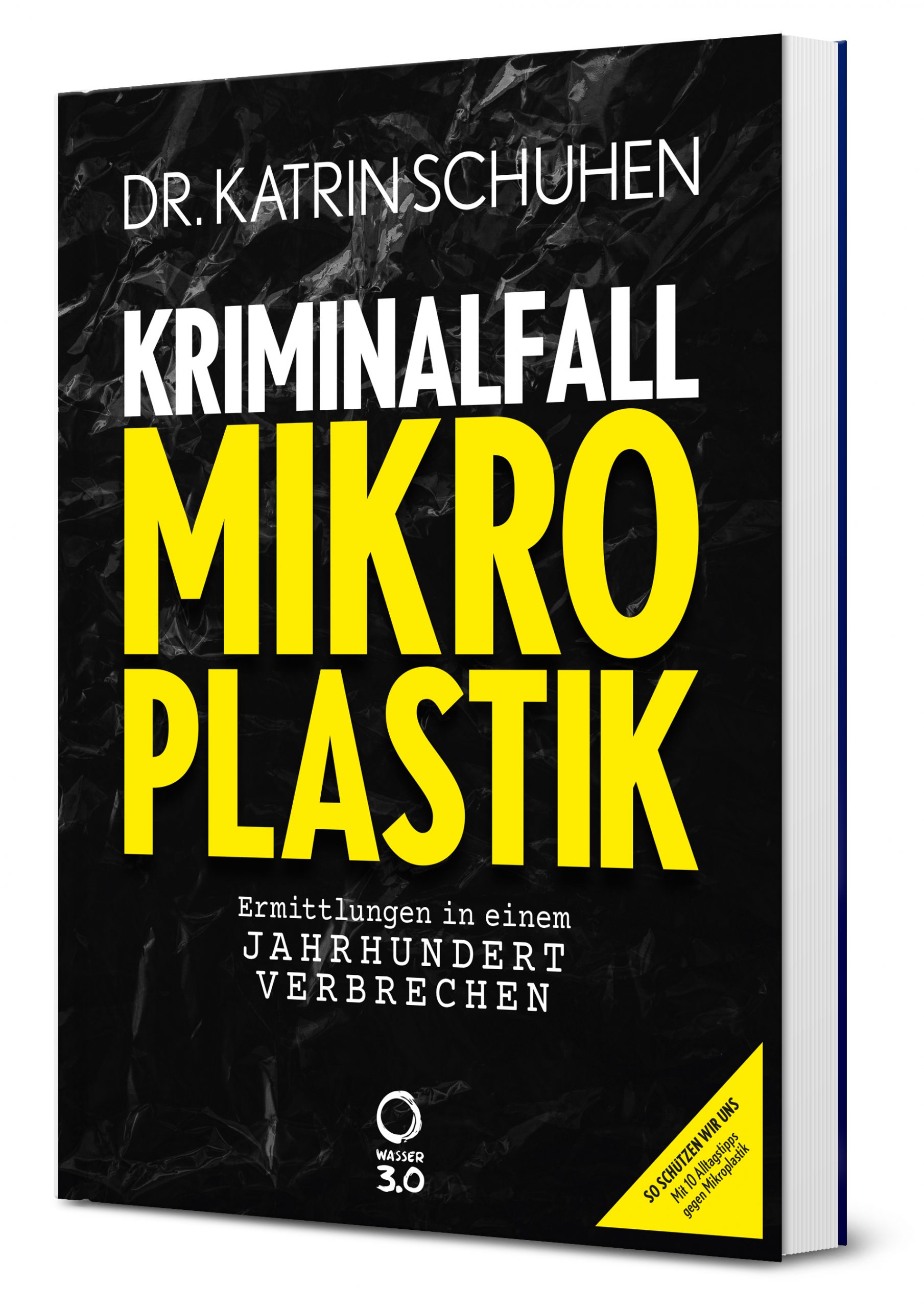
This book is for anyone who understands that microplastics are not a niche problem - but a crime against all of us that demands answers and accountability.
Author: Dr. Katrin Schuhen
Publisher: Wasser 3.0
Available only in German.
150 pages
Softcover
Produced according to Cradle-to-Cradle principles
€17.00 (D) / €17.50 (A) incl. VAT.
ISBN 978-3-00-086254-0
Pre-sale: from April 20, 2026
Release date: May 11, 2026
Special feature: The book is produced according "Cradle to Cradle" criteria. "Cradle to Cradle" in book printing means that materials, such as paper and inks, are selected and used in such a way that they can be recycled or even composted after use. In general, "Cradle to Cradle" is about designing products so that they can return to either a biological or technical cycle at the end of their life cycle.
FAQ about the author, Wasser 3.0 and the book
1Who is Dr. Katrin Schuhen
Dr. Katrin Schuhen is a chemist and health educator with a research focus on microplastics in water and in the human body. She has established herself as one of Germany’s leading experts in this field – not only in science, but also in public communication. Her goal: to make complex issues understandable and develop concrete solutions based on that knowledge.
2How did Katrin Schuhen come to focus on microplastics?
It all started with water. As a chemist specializing in water quality, she increasingly encountered plastic particles in her samples and found alarmingly few answers to explain them. Rather than waiting for regulations, she began conducting her own research and developing solutions. This approach led to the creation of Wasser 3.0.
3What is Wasser 3.0?
Wasser 3.0 is a nonprofit research and innovation company founded by Dr. Schuhen and based in Germany. It develops technologies and processes to remove microplastics from water bodies – practical, scalable, and independent of political decision-making processes. The name represents a new generation of water management: clean, solution-oriented, and sustainable.
4What exactly does Wasser 3.0 do?
Wasser 3.0 operates along three pillars: detecting, removing, and recycling microplastics. At its core is Wasser 3.0’s proprietary PE-X® technology, which is based on the “Clump & Skim” principle: microplastics are agglomerated using non-toxic materials and then skimmed off. This is complemented by standardized analytical techniques for monitoring and process control, as well as a circular economy concept that recycles separated particles instead of disposing of them. In addition, there are educational and awareness-raising initiatives, as well as a “Global Map of Microplastics” that maps microplastic pollution in regional water bodies.
5Why is there a need for a company like Wasser 3.0? Doesn't it already exist?
No, at least not in this combination. Many organizations conduct research on microplastics, but few simultaneously develop scalable solutions and engage in active public outreach. Wasser 3.0 combines all three areas: basic research, technology development, and public education. Added to this is a crucial difference in its self-concept: Wasser 3.0 is organized as a non-profit limited liability company (gGmbH), whereby profits do not go to shareholders, but are reinvested directly into research and the organization’s mission. This makes the company independent of commercial interests and lends credibility to its work.
6How does this book differ from other non-fiction books on the topic of (micro)plastics?
The book is neither a mere wake-up call nor an indictment – it is an investigation. Dr. Schuhen approaches the phenomenon of microplastics like a criminal case: Who knew what and when? Who remained silent? Who stands to gain? And: What can each and every one of us do? The combination of science, social criticism, and practical advice makes the book unique.
7Who is the book written for?
For anyone without a degree in chemistry who wants to understand what’s behind the microplastic crisis. This book is aimed at interested citizens, parents, teachers, journalists, and anyone who has stopped blindly trusting official statements that everything is okay. It is written in an accessible style suitable for everyday reading, without sacrificing scientific depth.
8What is the scientific basis for the book?
Dr. Schuhen draws on recent studies, her own research findings, and the work of her team at Wasser 3.0. The book is not an opinion piece but is based on verifiable data while also highlighting where gaps in knowledge exist and why certain questions remain unanswered for political or economic reasons.
9What can I really do as an individual?
More than expected. In her book, Dr. Schuhen outlines practical, immediately actionable steps: specifically reducing plastic packaging, washing synthetic clothing less often, and switching to bulk foods. Not a single perfect solution, but effective steps that add up, without waiting for politicians to act.
10How can I contact Katrin Schuhen and Wasser 3.0, for example for interviews or cooperations?
Dr. Katrin Schuhen is available for interviews, lectures, panel discussions, and media inquiries. Wasser 3.0 is open to collaborations with local governments, businesses, and educational institutions. Contact requests can be submitted directly via the Wasser 3.0 website.
Direct line to accelerate impact
More in our blog
2. September 2026

Four years, 13 sites, one principle: measure first, decide second. In REMEDIES 5.0 we deliver the microplastic data for Sylt, map the Danube together with schools and lead a work package. Here is what begins now.
26. August 2026
We are growing – and looking for two colleagues for microplastic analytics and our test center in Landau, Germany. Lab, plants, research – in a non-profit team that makes water without microplastics real. Flexible time model. Apply now!
18. August 2026
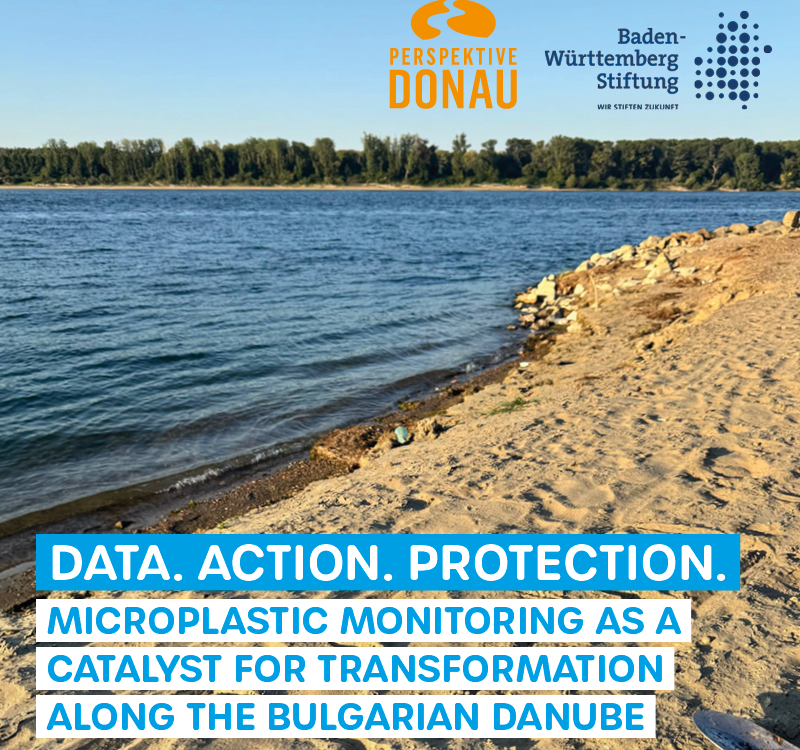
Along 450 river kilometres between Vidin and Silistra, the first standardised microplastic mapping of the Bulgarian Danube is taking shape. Wasser 3.0 and LessPlastic Bulgaria are measuring together with schools and volunteers.