VisualVest as German Partner of the Danube Challenge
22. May 2026
Swimwear as an Invisible Source of Microplastics
10. June 2026
Microplastics - From the Classroom to the Research Lab
What ispired 120 young microplastic detectives in Mannheim – and What's Next
Six months. Twelve locations. More than 80 water samples. And 120 young people who stopped asking "What can I really do?" – because they simply went out and did it.
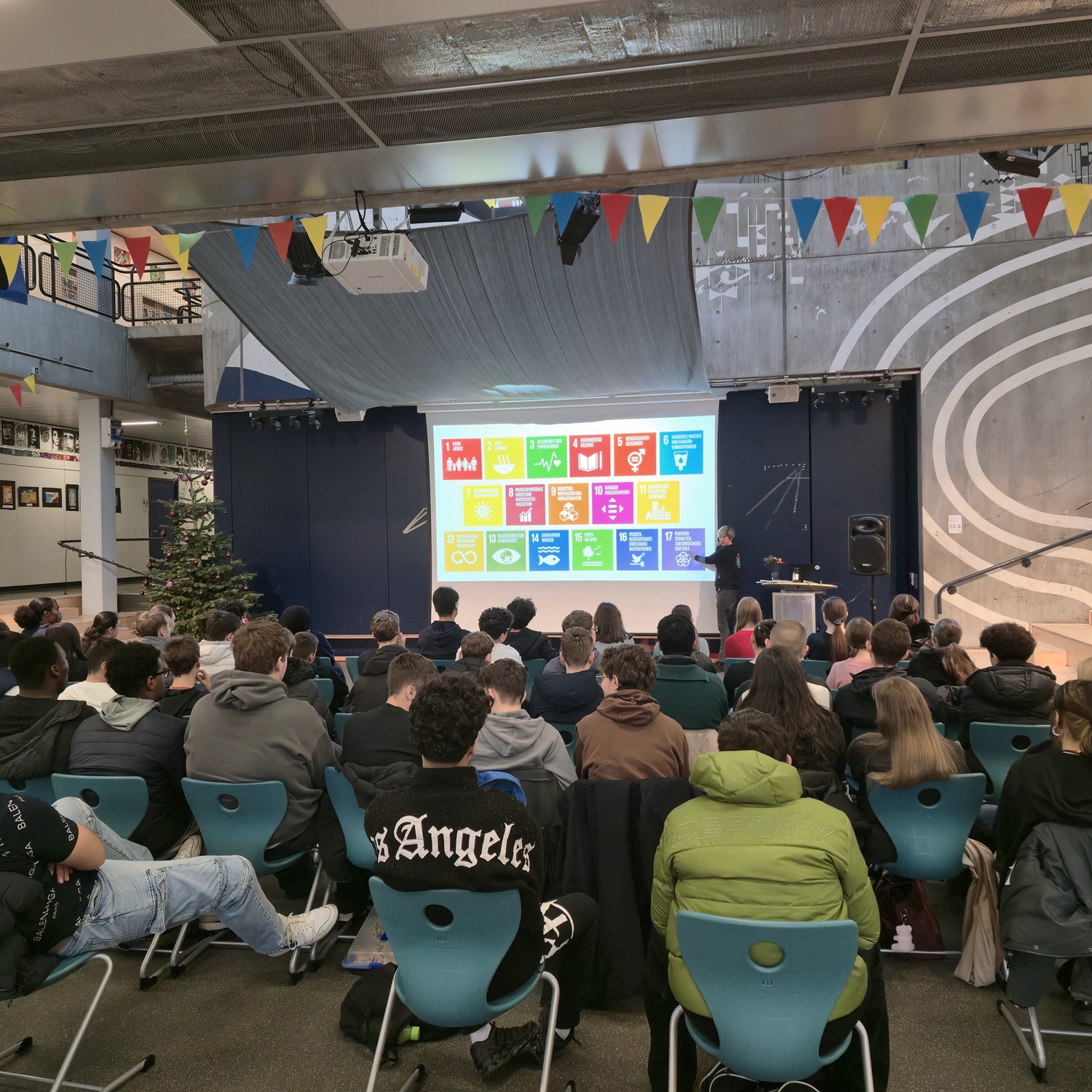
Kickoff of the Microplastic Detectives in Mannheim © Wasser 3.0
The Microplastic Detectives pilot project is complete. It has successfully demonstrated what is possible when real science, school education, and community engagement come together.
What Began as an Idea Became Living Research
In December 2025, the starting whistle blew at the Integrated Comprehensive School Mannheim-Herzogenried (IGMH). Students and teachers were introduced to the microplastics issue and trained in standardized water sampling: rinsing the glass bottles three times beforehand, proper labeling, and logging locations in real-time via the Wasser 3.0 app.
Then they headed out, on foot and by bicycle, ensuring a climate-neutral journey to the Rhine, the Neckar, and the Bonadieshafen (Mannheim Harbour). The students took the samples themselves. The subsequent microplastics analysis was carried out by Wasser 3.0 in the laboratory using selective fluorescence markers. With these markers, synthetic particles light up brightly while natural particles remain dark. The results were then discussed and interpreted together as a class – a genuine research dialogue at eye level.
The Results: Real Data, One Clear Hotspot
More than 80 water samples were analyzed and microplastics were detected in 52 of them. Multiple samples taken at the Bonadieshafen (Mannheim Harbour) proved particularly insightful: average values ranged from 11 MP/L at the Diffené Bridge to 544 MP/L in front of the lock – a highly pronounced hotspot where microplastics demonstrably accumulate.
The vital importance of repeated measurements is perfectly illustrated by a single location: in front of the lock, only 5 MP/L were measured on March 4th, whereas on April 8th, the count soared to 1,591 MP/L. A single isolated measurement here would have led to a completely false assessment. This is exactly why this project takes more frequent samples than others – delivering more resilient, comparable data.
All values are publicly accessible and are fed into the Global Map of Microplastics – a growing data infrastructure that makes regional water pollution visible worldwide.
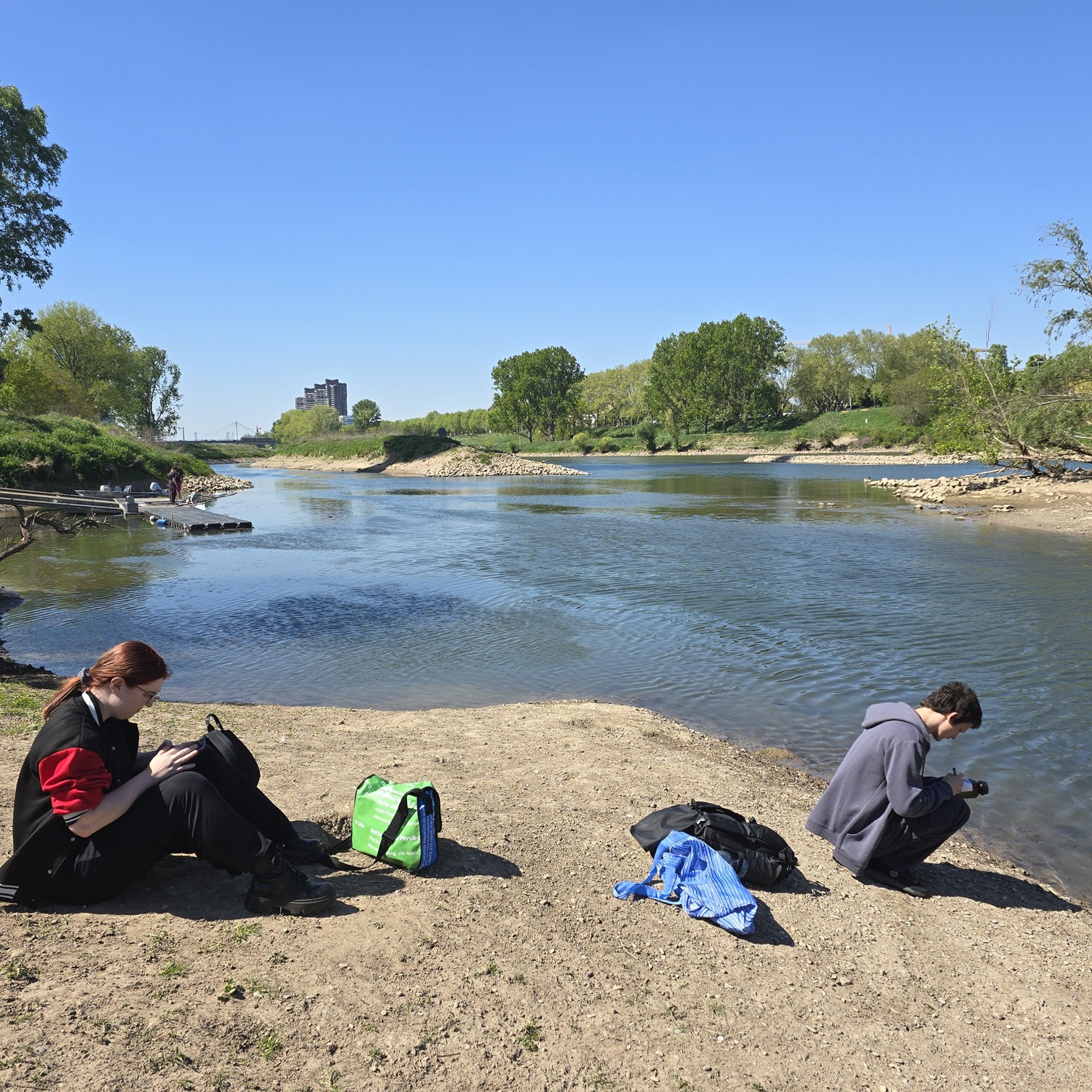
Students are taking water samples in Mannheim © Wasser 3.0
More Than Data: Young People Taking Action
Through an open house day and various activities centered around World Water Day, the students reached more than 400 additional people. Acting as experts, they explained their methods and shared what they learned with peers, parents, and teachers.
This is perhaps where the most significant impact lies. Eco-anxiety doesn’t disappear through talking, but it can be transformed into constructive action. "What can I really do?" becomes "I am making a difference." One participant put it perfectly:
"Everyone can make a difference – we just have to want it."
What's Next: From Pilot to Program
The pilot project was just the beginning. Microplastic Detectives is becoming a permanent component of the holistic STRONG THROUGH WATER program. The building blocks tested in Mannheim – standardized sampling, citizen science training, app-based data collection, and integration into the Global Map of Microplastics – are transitioning into a 9-pillar model. This model permanently connects microplastics research with the promotion of mental health, resilience, and nature experiences.
Specifically planned for 2026–2028: expanding to additional schools in Baden-Württemberg and two other federal states, building a European partner network, and conducting in-depth evaluations of local hotspots in cooperation with municipalities and environmental authorities.
Become a Sponsor of the Movement
To turn this successful pilot into a true flagship project, we are looking for partners who share this vision. Each year, we plan to host four Water Days with 25-30 students each, four integrated resilience workshops, over 40 microplastic samples for the Global Map of Microplastics, and train at least eight new teachers as multipliers.
Three ways to support the program:
- €7,500 – Water Day Patron: One full research day for an entire class
- €12,000/year – School Partner: One full school year for one school
- €30,000/year – Main Partner: An entire program for a whole region
Would you like to support us in a different way? Get in touch with us – together we will find the perfect fit. Or support us directly: 100% of every donation goes directly toward making an impact.
Read the Book, Equip a Classroom
For those wanting to dive deeper into the topic, we highly recommend the new book by Dr. Katrin Schuhen: Kriminalfall Mikroplastik – eine Ermittlung in ein Jahrhundertverbrechen (The Microplastics Case – An Investigation into a Crime of the Century), complete with evidence, perpetrators, and actionable solutions. It is produced according to Cradle-to-Cradle standards, and best of all: 100% of the proceeds flow into research and education for microplastic-free water.
And for companies looking to bring impact directly into the classroom: with a school sponsorship, you can equip an entire class. The bundle includes 30 copies of the book and 2 analysis kits for independent water sampling, which feed directly into the Global Map of Microplastics – for €1,250 per bundle. Eligible for funding under SDG 4, 6, and 14, and suitable for CSRD reporting.
Water connects. People do too. The Microplastic Detectives in Mannheim have shown that change starts from the ground up. Help us carry this movement to the next school, the next region, and the next federal state.